


Health Tips for Women in their 20s and 30s are not just suggestions — they are the foundation of lifelong physical strength, hormonal balance, and mental well-being. These decades shape your metabolism, fertility, bone health, and even your risk of chronic diseases later in life.
Modern women juggle careers, relationships, education, and sometimes motherhood — often putting themselves last. According to the World Health Organisation, women face unique health risks linked to hormonal transitions and lifestyle changes.
This is why structured and science-backed tips become essential during these formative decades.
Myfemily by Nutrinust Saloni can help you maintain a healthy and balanced life through personalised guidance tailored to women’s unique needs. With a strong focus on hormonal health, nutrition planning, weight management, and lifestyle correction, the approach goes beyond generic advice. Instead of quick fixes, Myfemily emphasises sustainable habits, practical diet strategies, and consistent accountability. This structured support makes it easier to manage stress, improve energy levels, balance hormones, and build long-term wellness in your 20s and 30s.
Why Your 20s and 30s Matter the Most
Your 20s are about building energy, habits, and resilience.
Your 30s are about maintaining that foundation while adapting to subtle physiological shifts.
During this time:
- Hormonal fluctuations are common
- PCOS and thyroid disorders are rising
- Stress levels increase
- Sleep quality often declines
- Nutritional deficiencies become frequent
The CDC emphasises preventive care and lifestyle management in young adult women.
Following consistent tips over the years can prevent long-term health complications.
10 Health Tips for Women in Their 20s and 30s
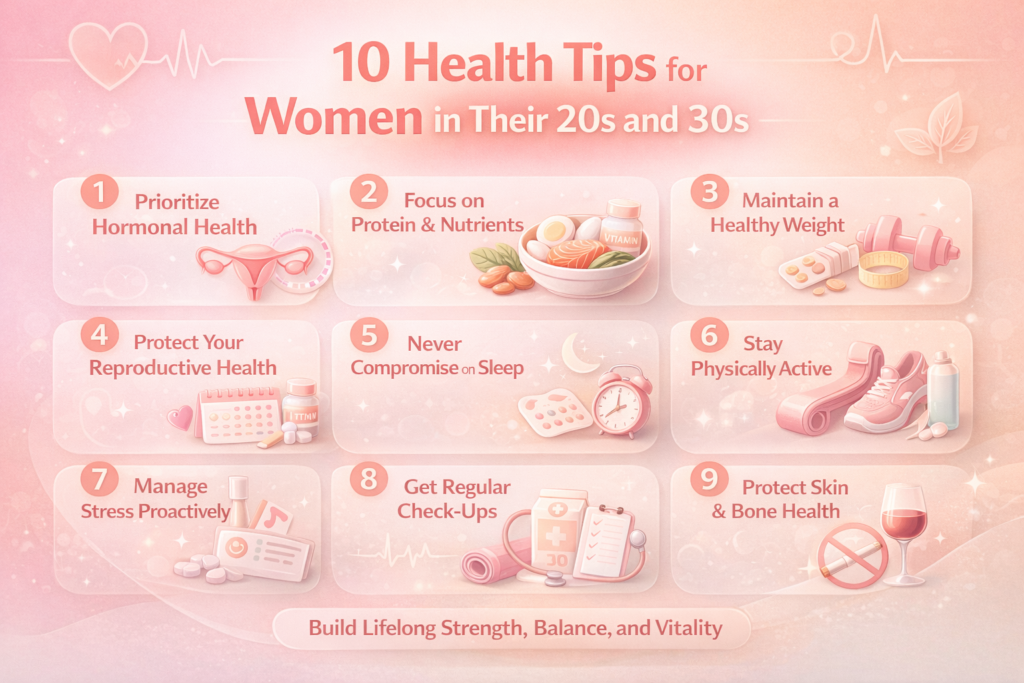
Below are the most important tips supported by medical research and preventive healthcare guidelines.
1. Prioritise Hormonal Health
Hormones regulate mood, metabolism, skin, and fertility.
- Track menstrual cycles
- Get thyroid levels tested if irregularities occur
- Manage stress levels
- Avoid excessive processed foods
PCOS awareness guide:
https://www.nichd.nih.gov/health/topics/pcos
Balanced hormones are central to effective Health Tips for Women in their reproductive years.
2. Focus on Protein & Essential Nutrients
Many Indian diets are low in protein.
- Aim for 0.8–1g protein per kg body weight
- Include iron-rich foods
- Ensure adequate calcium intake
- Monitor vitamin D & B12 levels
NIH nutrition guidelines:
https://ods.od.nih.gov/
Proper nutrition is one of the most powerful tips for preventing fatigue and muscle loss.
3. Maintain a Healthy Weight
Metabolism begins to shift after the mid-20s.
- Exercise for at least 30 minutes daily
- Limit ultra-processed foods
- Increase fiber intake
- Stay hydrated
Weight control remains one of the most practical approaches for long-term disease prevention.
4. Protect Your Reproductive Health
Sexual and reproductive care should never be ignored.
- Schedule annual gynaecologist visits
- Practice menstrual hygiene
- Get STD screenings if sexually active
- Discuss birth control safely
CDC reproductive health:
https://www.cdc.gov/reproductivehealth
Preventive reproductive care is a core pillar of effective tips.
5. Never Compromise on Sleep
Sleep deprivation affects hormones and mental clarity.
- Aim for 7–8 hours nightly
- Limit caffeine after evening
- Avoid screen exposure before bed
- Maintain a consistent sleep schedule
Sleep Foundation guidelines:
https://www.sleepfoundation.org/
Quality sleep is one of the simplest yet most ignored tips.
6. Stay Physically Active
Movement supports cardiovascular and bone health.
- Combine strength and cardio workouts
- Try yoga or Pilates
- Stretch regularly
- Avoid prolonged sitting
WHO physical activity recommendations:
https://www.who.int/news-room/fact-sheets/detail/physical-activity
Regular activity strengthens the impact of other Health Tips for Women.
7. Manage Stress Proactively
Chronic stress disrupts hormonal balance.
- Practice meditation
- Journal regularly
- Seek therapy if needed
- Limit overcommitment
NIH mental health resource:
https://www.nimh.nih.gov/
Stress management is one of the most essential Health Tips for Women in demanding decades.
8. Get Regular Preventive Check-ups
Early detection saves future complications.
- Blood pressure every 1–2 years
- Blood sugar & cholesterol tests
- Pap smear after age 21
- Clinical breast exams
Mayo Clinic screening guidelines:
https://www.mayoclinic.org/healthy-lifestyle
Routine screening strengthens all preventive tips.
9. Protect Your Skin and Bone Health
Your 30s begin subtle ageing processes.
- Use sunscreen daily
- Consume calcium-rich foods
- Avoid smoking
- Include strength training
National Institute on Ageing:
https://www.nia.nih.gov/
Skin and bone protection are underrated Health Tips for Women.
10. Avoid Smoking & Limit Alcohol
Smoking and excess alcohol increase long-term risks.
- Quit smoking completely
- Limit alcohol to one drink per day
- Avoid binge drinking
- Seek support if needed
CDC alcohol guidelines:
https://www.cdc.gov/alcohol/
Lifestyle discipline is the backbone of effective tips.
Understanding the Real Health Challenges in Your 20s
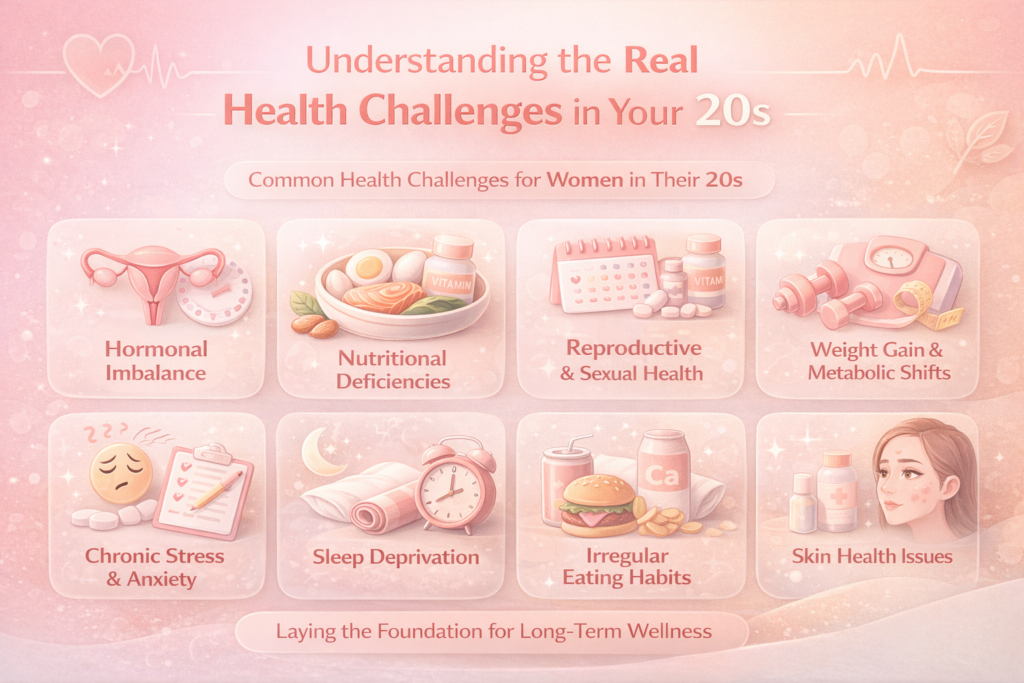
Health Tips for Women become even more important when we understand the real challenges women face during their 20s. This decade feels energetic and ambitious, but internally the body is adapting to stress, hormonal cycles, and lifestyle patterns that can shape future health outcomes.
Your 20s are often filled with career building, higher education, relationship decisions, and social changes. While outwardly everything seems stable, your body may silently struggle with hormonal shifts, nutritional gaps, and mental pressure. This is why consistent tips are not optional — they are preventive tools.
1. Hormonal Imbalance and PCOS
Hormonal fluctuations are common during the 20s.
Common symptoms include:
- Irregular periods
- Acne and oily skin
- Weight gain around the abdomen
- Hair thinning or excess facial hair
PCOS affects millions of women worldwide.
NIH PCOS resource:
https://www.nichd.nih.gov/health/topics/pcos
Managing stress, improving diet, and regular exercise are foundational Health Tips for Women that support hormonal balance.
2. Reproductive and Sexual Health Risks
Women in their 20s are at peak reproductive age, but this also increases vulnerability to infections.
Health risks include:
- Urinary tract infections
- Yeast infections
- Bacterial vaginosis
- Sexually transmitted infections
CDC reproductive health resource:
https://www.cdc.gov/reproductivehealth
Regular gynaecological checkups remain one of the most critical Health Tips for Women in this age group.
3. Nutritional Deficiencies
Unhealthy eating patterns are extremely common in the 20s.
Most frequent deficiencies:
- Iron
- Vitamin D
- Vitamin B12
- Calcium
- Protein
According to the NIH Office of Dietary Supplements:
https://ods.od.nih.gov/
Skipping balanced meals weakens the long-term impact of tips and may lead to fatigue and early muscle loss.
4. Poor Diet and Irregular Eating Habits
Late-night snacking, processed foods, and meal skipping are frequent habits.
Common dietary concerns:
- Excess sugar consumption
- High caffeine intake
- Low fibre intake
- Insufficient hydration
Harvard Health nutrition insights:
https://www.health.harvard.edu/topics/nutrition
Balanced nutrition strengthens all other Health Tips for Women by stabilising energy and metabolism.
5. Weight Gain and Metabolic Shifts
Even in the 20s, sedentary jobs and stress may trigger gradual weight gain.
Contributing factors:
- Desk-based lifestyle
- Lack of strength training
- Hormonal imbalance
- Emotional eating
WHO obesity overview:
https://www.who.int/news-room/fact-sheets/detail/obesity-and-overweight
Maintaining metabolic health is one of the most actionable tips.
6. Chronic Stress and Anxiety
Women in their 20s often experience high performance pressure.
Sources of stress:
- Career uncertainty
- Academic deadlines
- Relationship challenges
- Financial pressure
National Institute of Mental Health resource:
https://www.nimh.nih.gov/
Mental wellness is a foundational pillar of sustainable Health Tips for Women.
7. Sleep Deprivation
Sleep is often sacrificed for productivity.
Common sleep disruptors:
- Late-night screen exposure
- Overthinking
- Caffeine
- Alcohol
Sleep Foundation guidelines:
https://www.sleepfoundation.org/
Quality sleep directly influences hormones, immunity, and emotional regulation. Strong tips always include sleep discipline.
8. Skin Health and Early Lifestyle Damage
Although collagen production remains strong in the 20s, lifestyle damage begins early.
Risk factors:
- UV exposure without sunscreen
- Smoking
- Poor hydration
- Harsh cosmetic products
American Academy of Dermatology:
https://www.aad.org/
Protecting skin health is one of the preventive Health Tips for Women that shows visible long-term results.
Why Early Action Matters
The habits formed in your 20s carry forward into your 30s and beyond. Ignoring minor symptoms today may result in larger metabolic or hormonal issues later. That is why structured and science-backed tips should be implemented early.
Your body responds quickly in this decade — which means positive changes also show results faster. The earlier you adopt sustainable routines, the stronger your foundation becomes.
Navigating Your 30s: Building on the Foundation
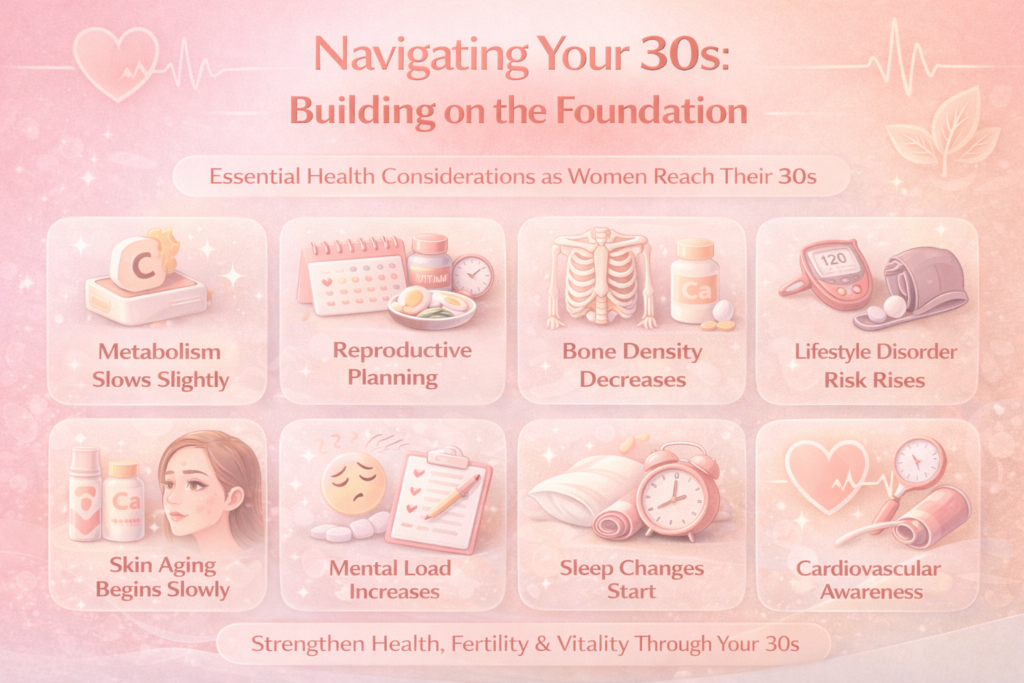
Health tips become even more strategic in your 30s because this decade brings subtle but important physiological shifts. While your 20s were about building habits, your 30s are about sustaining strength, preventing decline, and adapting to hormonal and metabolic changes.
This phase often brings stability in career and relationships. However, internally, your body begins to show early signs of ageing. Metabolism may slow slightly, recovery time increases, and hormonal balance requires closer attention. Following intentional Health Tips for Women during this decade protects long-term vitality.
1. Metabolism Begins to Slow
After the early 30s, metabolic rate may gradually decline.
Common changes include:
- Easier weight gain
- Reduced muscle mass
- Increased fat accumulation
- Slower recovery after workouts
National Institute on Ageing:
https://www.nia.nih.gov/health
Strength training and protein intake are essential health tips to preserve lean muscle and maintain metabolic health.
2. Fertility Awareness and Reproductive Planning
Fertility naturally declines after age 30.
Important considerations:
- Ovarian reserve gradually decreases
- Egg quality may reduce
- Hormonal irregularities may appear
- Pregnancy risks slightly increase
CDC fertility information:
https://www.cdc.gov/reproductivehealth/infertility
Proactive reproductive care is one of the most practical Health Tips for Women in their 30s.
3. Bone Density and Calcium Needs
Peak bone mass is achieved in early adulthood. After 30, maintenance becomes critical.
Risk factors:
- Low calcium intake
- Vitamin D deficiency
- Sedentary lifestyle
- Smoking
Strength training, sunlight exposure, and adequate calcium are preventive Health Tips that reduce long-term fracture risk.
4. Rising Risk of Lifestyle Disorders
The 30s often reveal early warning signs of chronic diseases.
Common risks include:
- Insulin resistance
- Thyroid disorders
- Hypertension
- Elevated cholesterol
CDC diabetes prevention:
https://www.cdc.gov/diabetes/prevention
Routine screenings combined with consistent Health Tips for Women help prevent escalation into serious conditions.
5. Skin Ageing and Collagen Decline
Collagen production gradually slows in the 30s.
Visible changes:
- Fine lines
- Loss of elasticity
- Dullness
- Increased sensitivity
American Academy of Dermatology:
https://www.aad.org/public
Daily sunscreen and antioxidant-rich nutrition are protective Health Tips for maintaining skin health.
6. Mental Load and Emotional Burnout
Women in their 30s often juggle multiple responsibilities.
Stress triggers include:
- Career leadership roles
- Parenting responsibilities
- Financial planning
- Caregiving duties
National Institute of Mental Health:
https://www.nimh.nih.gov/health
Emotional regulation and stress management are essential Health Tips for Women for preventing burnout.
7. Sleep Quality Changes
Sleep patterns may become lighter with age.
Common issues:
- Difficulty staying asleep
- Hormonal-related insomnia
- Stress-induced sleep disruption
- Increased screen exposure
Sleep Foundation:
https://www.sleepfoundation.org/
Prioritising sleep hygiene remains one of the most powerful Health Tips in this decade.
8. Cardiovascular Health Awareness
Heart disease risk gradually increases after 30.
Risk contributors:
- Sedentary lifestyle
- Poor diet
- Smoking
- Family history
American Heart Association:
https://www.heart.org/
Cardiovascular prevention must be integrated into long-term Health Tips planning.
Why Your 30s Demand Smarter Health Planning
Unlike your 20s, where the body quickly recovers, your 30s require intentional maintenance. Small neglects may show faster consequences. That is why structured and science-based Health Tips for Women must evolve as your body evolves.
Your 30s are not about decline — they are about optimisation. With the right approach, you can preserve strength, fertility, metabolism, and mental clarity well into later decades.
Why a Women’s Health Coach Can Transform Your Results
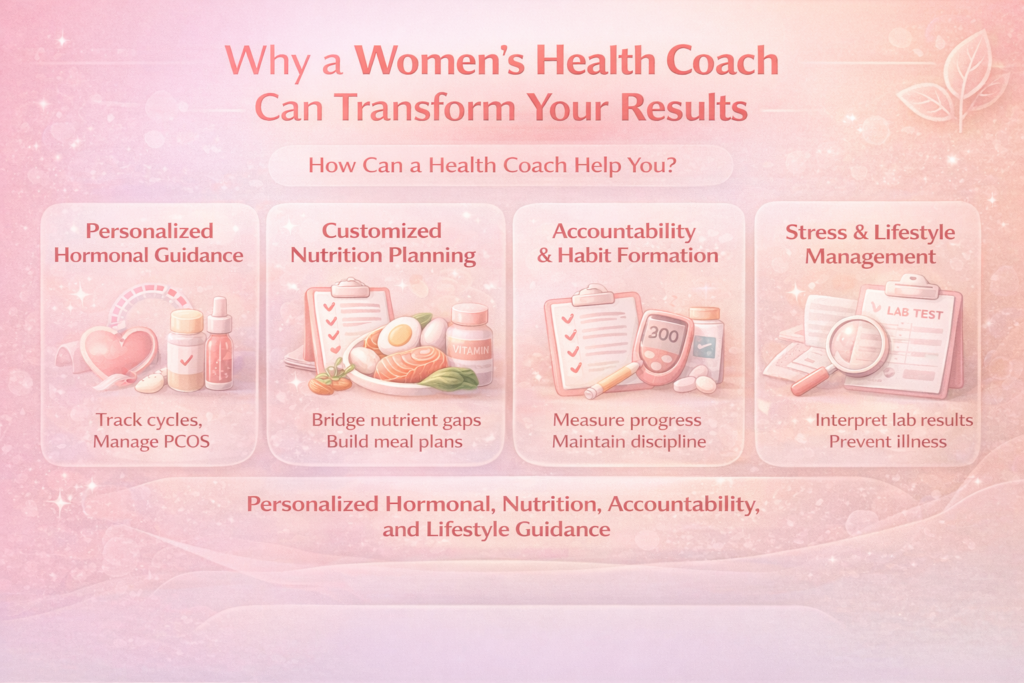
Health Tips are powerful, but implementation is where most women struggle. Knowing what to do is different from consistently doing it. Between career demands, family responsibilities, and mental load, maintaining discipline becomes difficult without structured guidance.
This is where a Women’s Health Coach becomes valuable. A professional coach personalises your approach and helps you apply Health Tips for Women in a sustainable, realistic way.
1. Personalised Hormonal Guidance
Every woman’s body responds differently.
A Women’s Health Coach can help with:
- Tracking menstrual cycles
- Identifying hormonal triggers
- Managing PCOS symptoms
- Creating hormone-supportive nutrition plans
Instead of generic advice, personalised strategies make Health Tips more effective.
2. Customised Nutrition Planning
Many women struggle with:
- Protein deficiency
- Iron deficiency
- Vitamin D and B12 gaps
- Inconsistent meal timing
A coach builds a practical meal plan tailored to:
- Body type
- Lifestyle schedule
- Fitness goals
- Reproductive stage
Structured nutrition support enhances the long-term success of Health Tips.
3. Accountability and Habit Formation
Discipline often fades without accountability.
A Women’s Health Coach:
- Monitors progress
- Tracks health metrics
- Adjusts strategies
- Keeps motivation high
Accountability transforms theoretical Health Tips for Women into measurable results.
4. Stress and Lifestyle Management
Chronic stress disrupts hormones and sleep cycles.
A coach helps you:
- Develop stress-reduction routines
- Improve sleep hygiene
- Structure daily movement
- Balance work and personal life
Lifestyle optimisation ensures that Health Tips are not temporary but permanent.
5. Preventive Health Strategy
Instead of reacting to illness, a Women’s Health Coach focuses on prevention.
They guide you to:
- Schedule timely health screenings
- Interpret lab results
- Identify early warning signs
- Build long-term wellness plans
Preventive planning strengthens the overall impact of Health Tips for Women.
Why Becoming a Women’s Health Coach Is a Powerful Career
As awareness around female wellness grows, the demand for specialized guidance is increasing rapidly. Women are seeking professionals who understand hormonal balance, PCOS, fertility, nutrition, and mental health from a holistic perspective.
This has created a strong opportunity for women to build careers in health coaching while promoting structured Health Tips in communities.
Why Myfemily Educates Is the Best Institute to Become a Women’s Health Coach

If you are passionate about women’s wellness, professional training is essential.
Myfemily Educates
https://myfemilyeducates.com/
stands out as one of the leading institutes for Women’s Health Coaching.
What Makes Myfemily Educates Different?
- Industry-focused curriculum
- Specialisation in hormonal and women’s health
- Practical case-study training
- Real client transformation strategies
- Business and career guidance
- Certification credibility
Unlike generic nutrition courses, Myfemily Educates focuses specifically on women’s health challenges relevant to the 20s and 30s. Their structured approach ensures that coaches can confidently guide clients using evidence-based Health Tips.
Why Professional Certification Matters
A certified Women’s Health Coach:
- Builds trust with clients
- Provides safe and structured advice
- Understands lab reports and deficiencies
- Creates long-term transformation programs
Certification strengthens the practical application of Health Tips for Women and ensures ethical practice.
Growing Demand for Women’s Health Coaches
With rising cases of:
- PCOS
- Thyroid disorders
- Stress-related hormonal imbalance
- Nutritional deficiencies
The demand for expert guidance is increasing. Women are actively seeking professionals who can simplify complex Health Tips into actionable plans.
The Long-Term Impact
Working with a Women’s Health Coach accelerates results. Becoming one empowers you to help others while building a meaningful career.
Professional guidance bridges the gap between information and implementation. Structured coaching ensures that Health Tips are customised, consistent, and sustainable.
Building a Lifelong Wellness Roadmap
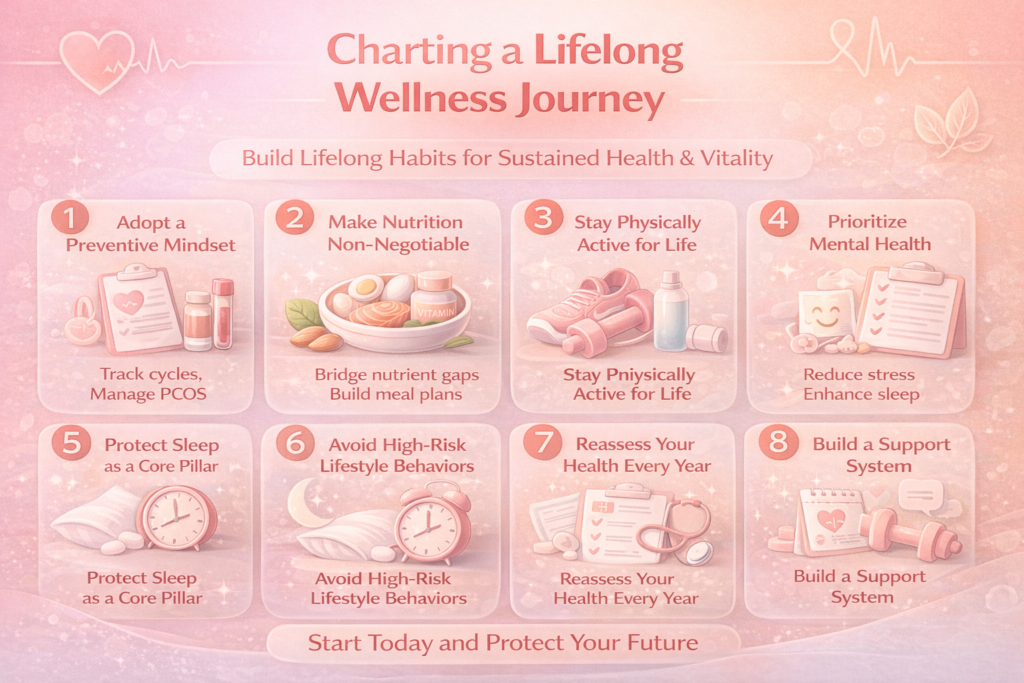
Health Tips are not meant to be followed for a few weeks and forgotten. They are long-term strategies that evolve with age, lifestyle, and personal goals. Your 20s and 30s are the decades where habits become identity, and identity shapes lifelong health outcomes.
If you apply structured and science-backed Health Tips for Women consistently, you reduce the risk of hormonal disorders, metabolic diseases, fertility complications, and mental burnout later in life.
1. Adopt a Preventive Mindset
Most women seek help only after symptoms appear.
A preventive approach includes:
- Annual health screenings
- Regular blood work
- Monitoring hormonal patterns
- Tracking menstrual health
Preventive planning strengthens the long-term impact of Health Tips and avoids avoidable complications.
2. Make Nutrition Non-Negotiable
Balanced nutrition is not about dieting. It is about fueling your body.
Focus on:
- Adequate protein intake
- Iron and calcium-rich foods
- Omega-3 fatty acids
- Fibre and hydration
Consistent nutrition habits reinforce foundational Health Tips throughout adulthood.
3. Stay Physically Active for Life
Movement must become part of your identity.
Long-term fitness strategy:
- Strength training twice weekly
- Moderate cardio sessions
- Flexibility exercises
- Daily walking routines
Sustainable activity patterns maximise the benefits of structured Health Tips.
4. Prioritise Mental and Emotional Health
Stress does not disappear with age — it transforms.
Protect your mental well-being by:
- Practicing mindfulness
- Seeking therapy when needed
- Setting realistic boundaries
- Building supportive relationships
Mental resilience amplifies the effectiveness of all Health Tips for Women.
5. Protect Sleep as a Core Pillar
Sleep is often underestimated.
Long-term sleep habits include:
- Fixed sleep-wake cycles
- Reduced screen exposure
- Limiting caffeine
- Creating a calm night routine
Deep sleep regulates hormones, immunity, and metabolism — making it central to sustainable health tips.
6. Avoid High-Risk Lifestyle Behaviours
Small habits accumulate into long-term risk.
Protect yourself by:
- Avoiding smoking
- Limiting alcohol
- Reducing ultra-processed foods
- Managing screen addiction
Lifestyle discipline strengthens the protective power of preventive Health Tips.
7. Reassess Your Health Every Year
Your body changes with every decade.
Annual reassessment should include:
- Blood pressure monitoring
- Blood sugar and cholesterol
- Thyroid screening
- Gynecological evaluation
Regular evaluation ensures that your Health Tips for Women strategy adapts as your body evolves.
8. Build a Support System
Accountability improves consistency.
Support may include:
- Family encouragement
- Fitness communities
- A Women’s Health Coach
- Structured wellness programs
Support systems help translate knowledge into consistent action, strengthening practical Health Tips.
The Bigger Picture
Your 20s and 30s are not just busy decades — they are foundational decades. The effort you invest in structured Health Tips for Women today determines the quality of your 40s, 50s, and beyond.
Women often prioritise career, relationships, and caregiving over personal health. However, long-term productivity and happiness depend on physical strength and emotional balance.
Final Takeaway
The journey of applying consistent Health Tips for Women is about awareness, discipline, and adaptability. Hormones change, responsibilities increase, and stress evolves — but your commitment to health must remain steady.
By focusing on preventive care, proper nutrition, physical activity, mental resilience, and professional guidance when needed, you build a body that supports your ambitions rather than limiting them.
Your health is not a side project — it is the foundation of every role you play.
Start today. Stay consistent. Protect your future.